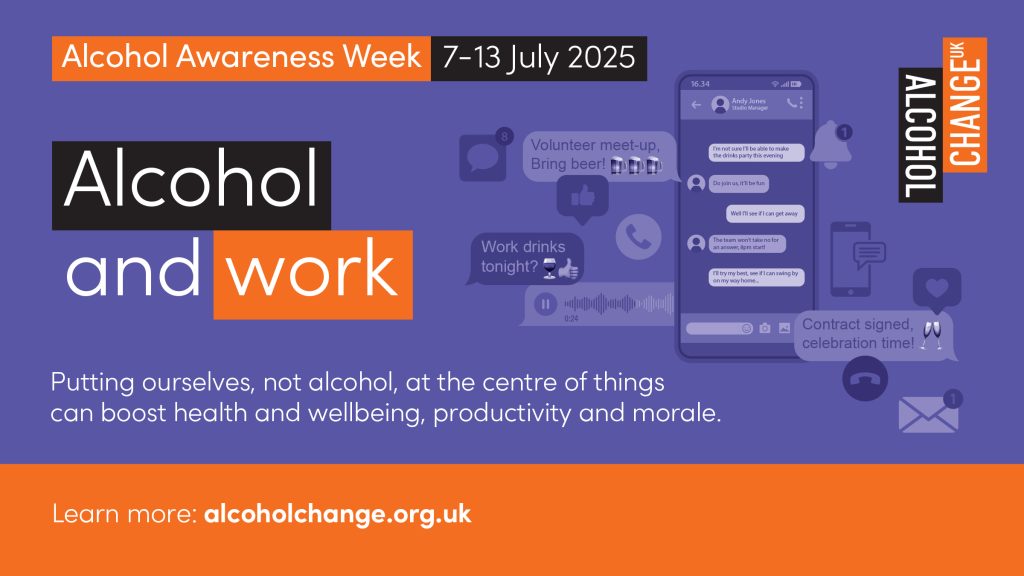
Led annually by UK charity Alcohol Change UK, Alcohol Awareness Week runs from 7-13 July 2025, and this year’s theme is ‘alcohol and work’.
When it comes to alcohol, how does the work we do influence our drinking and our drinking impact our work?
Around 10 million of us are regularly drinking alcohol in ways that can harm our health and wellbeing. From headaches, hangovers and sleepless nights to lower productivity and symptoms like anxiety and depression worsening over time, alcohol affects us in so many ways.
At the same time, the world of work is constantly changing. Lots of us are working longer hours, feeling more stress and experiencing a blurring of lines between work and home, while alcohol-centric workplace cultures are still a reality for so many. Moving in and out of work, whether planned or unplanned, can also affect us and our drinking habits – from unemployment and retirement to parental leave and caring responsibilities. These transitions can sometimes leave us feeling unsettled, bored, isolated and lonely, causing us to drink more alcohol and face additional challenges with our physical and mental health, relationships, finances and more.
That’s why, from offices and factories to shift-work and front-line services, this year’s Alcohol Awareness Week seeks to unravel the complex relationship between alcohol and work and celebrate the benefits that individuals, organisations and communities can unlock through fostering healthier, safer and more respectful workplace cultures across different industries, sectors and types of work.
Dr Richard Piper, CEO of Alcohol Change UK, the charity behind Alcohol Awareness Week, said:
“Whether it’s used as a team bonding tool, a reward or as a default for Friday night drinks or networking events, alcohol is often made to feel like the main attraction, particularly at workplace socials, to the point where many of us are made to feel uncomfortable or excluded if we don’t drink or want to drink less alcohol, no matter our reason.”
Sue Murphy, CEO of Catalyst Support said:
“At Catalyst Support, we know first-hand that alcohol can significantly impact our wellbeing, both in our professional lives and beyond. The pressures of modern working life often lead people to use alcohol as a coping mechanism. Transitions such as unemployment, retirement, parental leave, or caring responsibilities can amplify feelings of loneliness, isolation, and anxiety, increasing reliance on alcohol and intensifying the very stresses we seek to escape. As a charity, we believe that open, compassionate dialogue and genuine support structures at work are essential steps towards healthier individuals, teams, and communities.”
Catalyst Support is here to offer non-judgemental, professional support. If you are concerned about your relationship with alcohol or would like to join a community group to help you stay sober:
- Sign up to Catalyst Counselling – our service that helps with mental health concerns, such as anxiety and depression, or individuals and loved ones affected by drug and alcohol use. We offer up to 24 sessions of confidential counselling, using a non-judgmental and personal approach. We provide online sessions or face-to-face sessions in Woking and Godalming. Our service operates an affordable, subsidised fee structure, with session costs ranging from £15-£40 per session depending on income.
Catalyst Counselling – Catalyst Support
- Join a support group – Maintaining Sobriety is a bi-weekly support group running online on Tuesday evening 6-7.30pm and Saturday morning 10-11am, starting on Saturday 26th July.
This is a structured group designed for individuals who wish to develop coping strategies to better manage and maintain their sobriety. Please note, this group is for individuals who are sober, and anyone wishing for support to initially get sober will need to access specialist support.